
 By
By 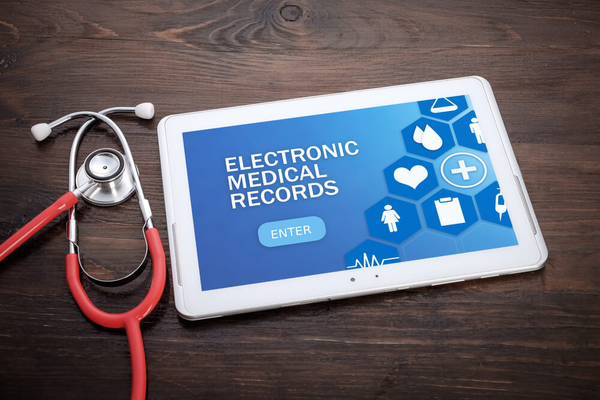
Family practice EMRs are especially designed for a wide range of medical applications. It marks a substantial departure from conventional paper-based health systems. To provide wellness program providers with a centralized and easily accessible app. These applications digitize individual patient records. It includes medical history, diagnosis, prescriptions, aversions, test results, and billing.
Database, ineffective processes, and information sharing issues between clients and physicians. These have historically overwhelmed family medicine EMR and offices. High operation costs and an abrupt learning curvature for staff initially hindered its use. But the observable advantages of better treatment have spurred widespread adoption.
These are now essential to contemporary family practice. It has a direct impact on revenue cycle management, safety, and operational effectiveness. The significance affects the market for business real estate in addition to the clinic. The need for office spaces has grown dramatically. Especially those built to support workflows that rely on EMRs.
To accommodate the electronically stored nature of this application. Contemporary medical office environments need strong IT infrastructure, safe data storage, and adaptable layouts.
It’s becoming more important to be able to tie data from an EMR alongside building management systems, or BMS. It’s for optimal usage and comfort, especially in high-end medical office that caters to large practice groups.
What’s An Electronic Medical Record?
Although it is frequently used interchangeably with the more general EHR, or Electronic Health Record. It shares data across various providers and helps family specialists handle complete care, referrals, and portals. In addition to scheduling, e-prescribing, as well as billing for improved treatment coordination and profitability.
It is an on-screen chart system that holds histories, medications, and labs. Thus, planning and making treatment more organized, readable, as well as efficient. With an emphasis on customization, usability, and workflow efficiency.
The software for family medicine clinics provides customized capabilities for chronic care and a variety of needs, like vaccines. Check out https://downloads.aap.org/AAP/PDF/AAP-Immunization-Schedule.pdf for more details.
The evolution from manual to digital record administration has greatly amplified the efficiency of healthcare institutions. It is one of the programs that has assisted the healthcare sector in effectively embracing the digital era.
An urgent need for accurate and easily accessible health information. It facilitates prompt, informed choices in patient care. It’s the driving force behind the transition from written to electronic medical records.

Important Qualities to Consider
- Customization: Workflows and templates that adjust to different family medicine requirements. We have acute care, pediatrics, and geriatrics, for instance.
- All-inclusive tools include telehealth, billing, portals, e-prescribing, and integrated scheduling.
- Workflow Efficiency: Smooth information entry, automated reminders, and quick charting.
- Interoperability: The capacity to safely exchange patient files.
- Mobile Access: You have access to files from any location.
What Use Do Electronic Medical Records Serve?
Healthcare professionals and organizations utilize this for several reasons. Among these objectives are:
- Centralized Record: These professionals can make well-informed judgments. They can obtain a more complete picture of an individual’s health with the help of a centralized database.
- Professional Coordination: By accessing a patient’s EMR. Doctors, specialists, and various other wellness program providers can coordinate better care alternatives. They can increase transparency and consistency during patient care.
- Prescription Management: By sending electronic prescriptions to pharmacies. Wellness program providers can lower the possibility of mistakes.
It improves the prescription management procedure. Go to this page for further reading.
In general, they are used to improve your loved ones’ care, facilitate data-driven decision-making for clients. It also optimizes workflow efficiencies. And improves interpersonal relationships among healthcare professionals within a single practice.
Software Implementation’s Advantages for Wellness Program Providers
When EMRs are integrated into workflows and processes, healthcare organizations and providers gain greatly. Among them are:
- Improved Patient Care: At the moment of nurse, it offers comprehensive and current data.
- Fast Accessibility to Patient Files: Wellness program providers have immediate access to records, which expedites decision-making.
- Accurate plus Detailed Documentation: The digital format lowers the possibility of incomplete records and mistakes in transcription.
- Secure Info Sharing: In a variety of healthcare contexts, this enables data to be safely shared with authorized individuals.
- Greater Patient Involvement: People who have simple access to their medical records are more engaged in their care.
- Efficiency and Productivity: Healthcare professionals can focus more on health. They reduce the amount of time spent keeping paper records, which simplifies administrative tasks.
- Diagnosis & Treatment Help: Its advanced analytics and decision-support tools can aid in the planning of therapy and diagnosis.
- Lower Costs: As a result of improved safety, less unnecessary testing, less paperwork, and improved health. Costs may gradually decrease as a result.
Vital Roles in Family Medicine
- Centralized data includes allergies, vaccines, treatment plans, tests, and demographic info in one place.
- Improved workflow efficiency by seeking essential information. It streamlines paperwork, reduces errors, and simplifies billing. This contains the CMS requirements.
- Decision Support: Offers clinical guidance and reminders to improve patient safety and treatment quality.
- Referral Management: Safely share records with experts, track status, and send referrals.
- Integration with billing and scheduling software improves practice management efficiency.






Comments